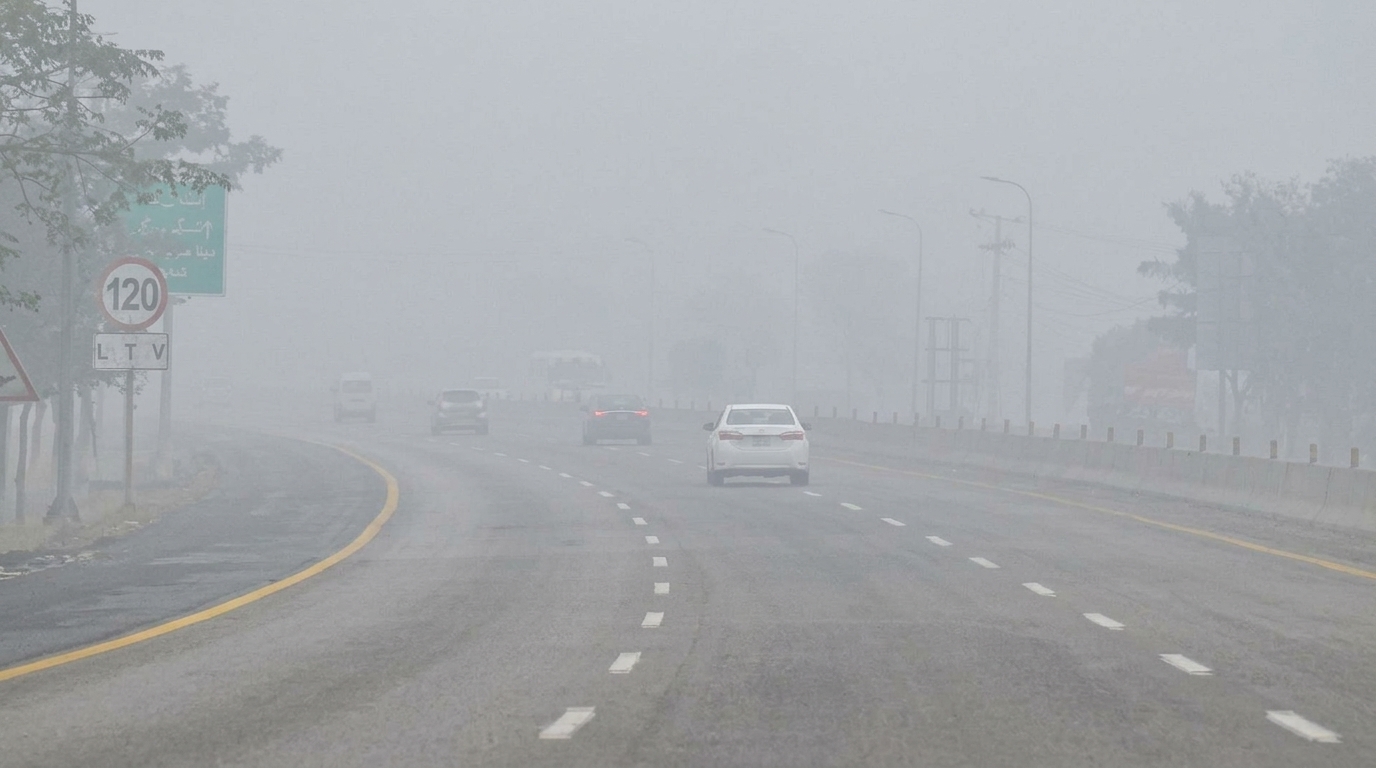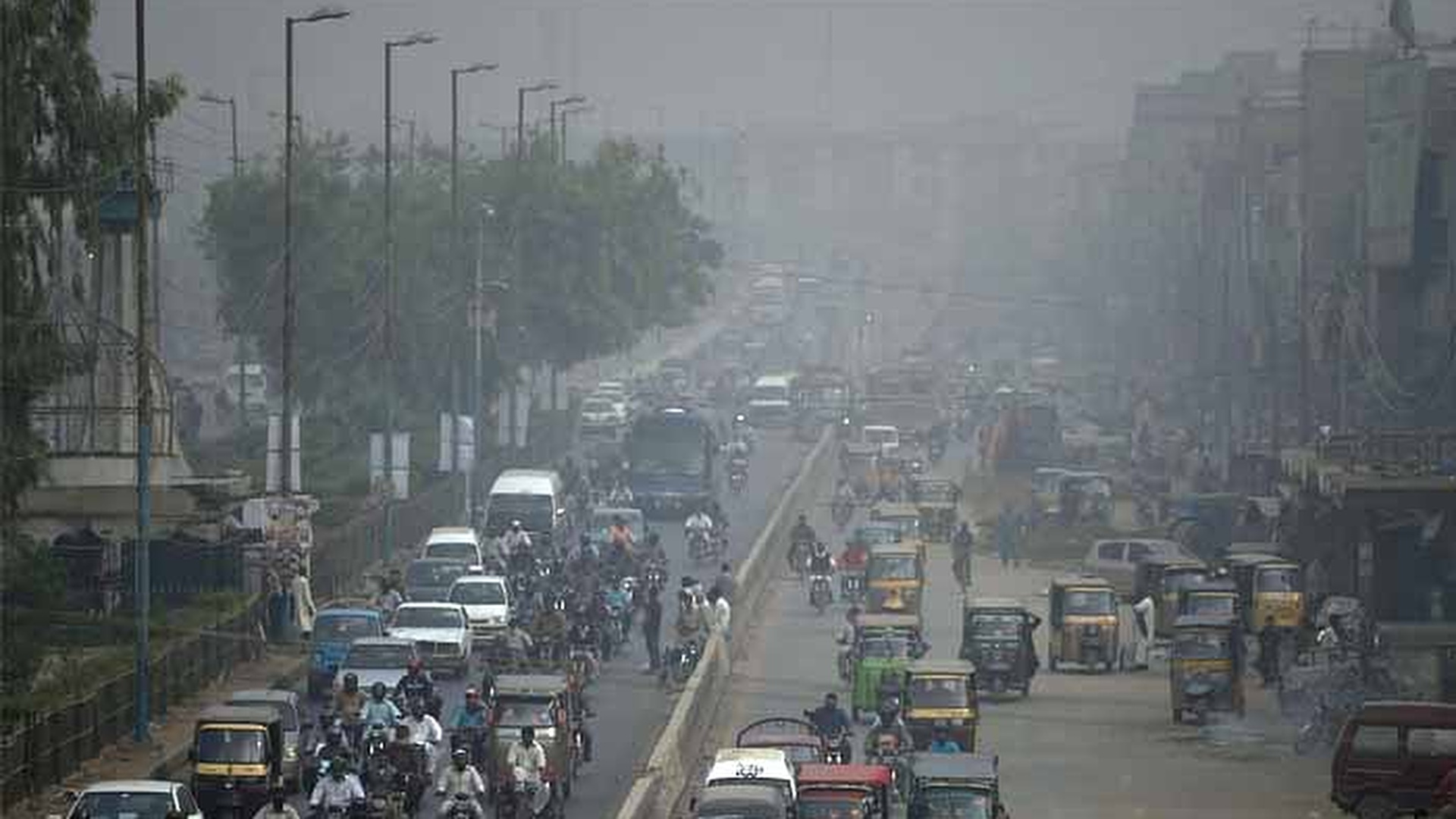
Lahore: Lahore ranked first and Karachi third among the world’s most polluted major cities on Wednesday, November 25, as air pollution levels raised concerns over public health in Pakistan’s two provincial capitals.
Lahore recorded an Air Quality Index (AQI) of 354, while Karachi registered 198, according to the readings reported on Wednesday.
The rankings reflect air quality conditions at the time of measurement and may change throughout the day depending on weather conditions, emissions and pollutant concentrations.
Under the internationally used US Air Quality Index classification, readings between 151 and 200 fall within the unhealthy category, while readings above 300 are classified as hazardous.
Exposure to pollution at these levels can affect people with cardiovascular and respiratory conditions, while children, older adults and individuals with asthma face an increased risk of health complications.
Health risks and sources of pollution
Air pollution in Pakistan is associated with vehicle emissions, industrial activity, construction dust, brick kilns, waste burning and agricultural residue burning.
During winter, declining temperatures and limited air circulation can prevent pollutants from dispersing, contributing to smog formation across Punjab.
Karachi also faces air pollution associated with traffic congestion, industrial emissions and construction activity.
Particulate matter, particularly PM2.5, remains a concern because the particles can penetrate the lungs and enter the bloodstream. Prolonged exposure has been associated with respiratory diseases, cardiovascular complications and reduced lung function.
Residents are advised to monitor air quality readings, limit outdoor activities during periods of pollution and wear N95 masks when exposure cannot be avoided.
Pakistan’s air pollution challenges
Wednesday’s readings follow a series of pollution episodes recorded across Punjab during November. Lahore’s AQI exceeded 500 on November 22, according to earlier reporting.
Pakistan’s annual average PM2.5 concentration stood at 67.3 micrograms per cubic metre in 2025, more than 13 times the World Health Organisation’s (WHO) annual guideline of five micrograms per cubic metre.
The government introduced the National Clean Air Policy in 2023 to address emissions from transport, industry, agriculture and other sectors.
However, recurring pollution episodes highlight the need for enforcement of emissions standards, expansion of air quality monitoring and investment in public transport.
While restrictions on outdoor activities can reduce immediate exposure, addressing air pollution requires measures targeting emission sources throughout the year.