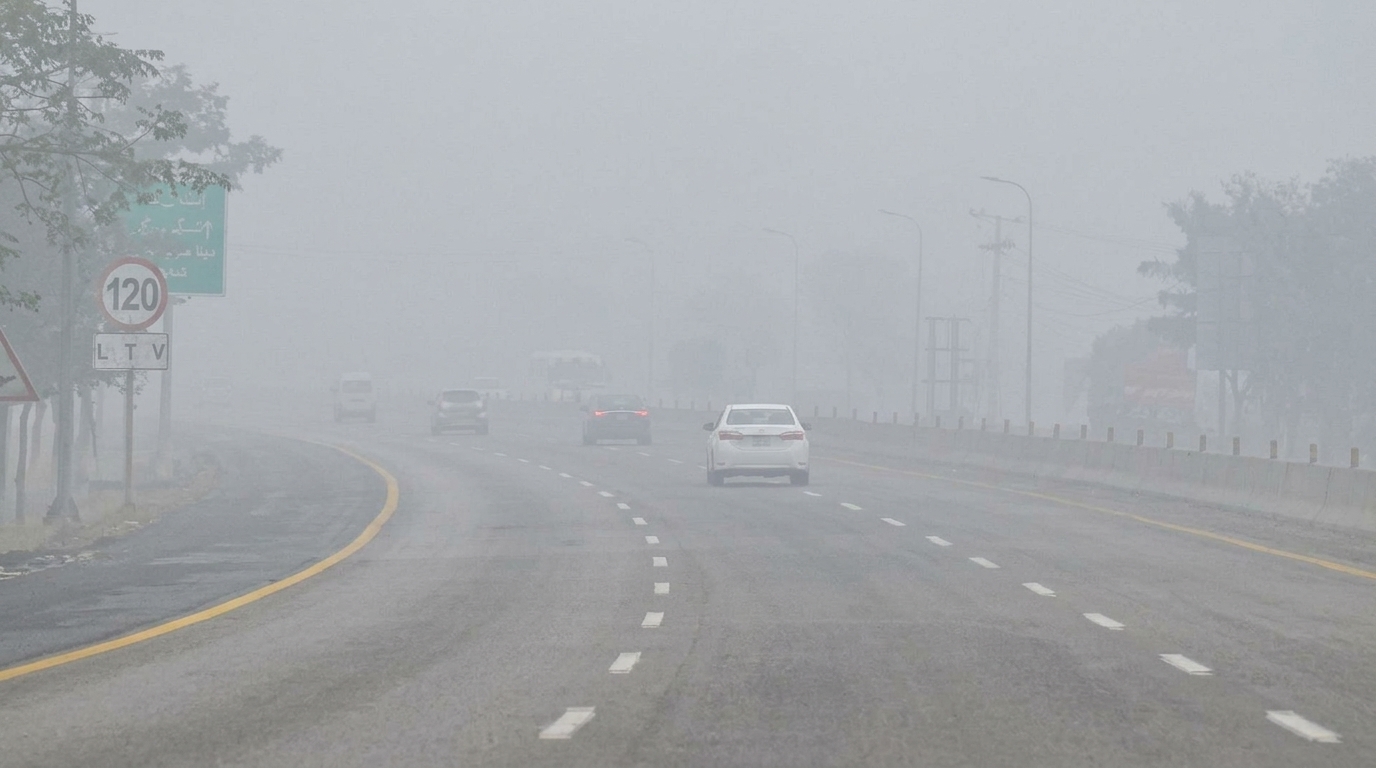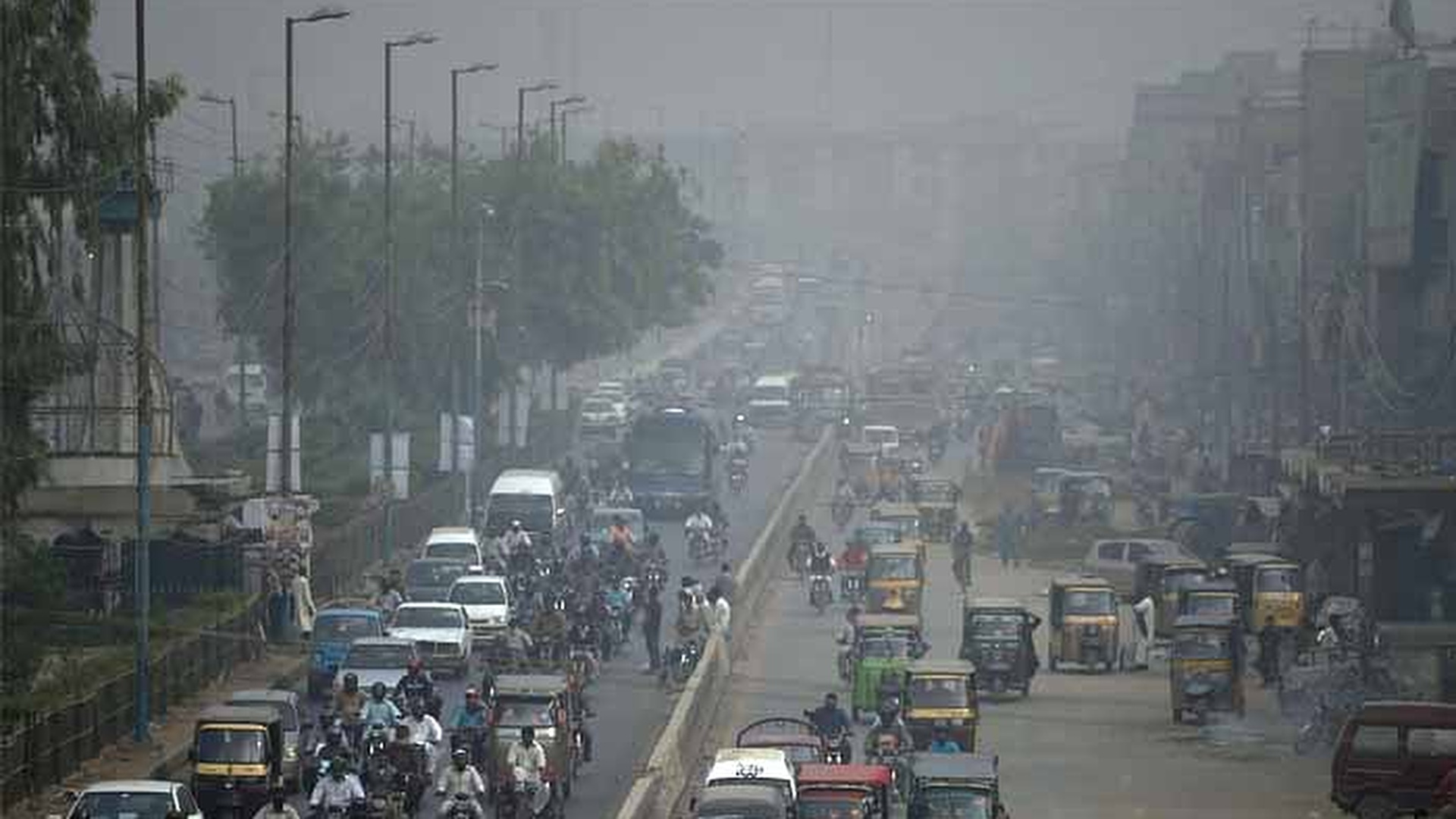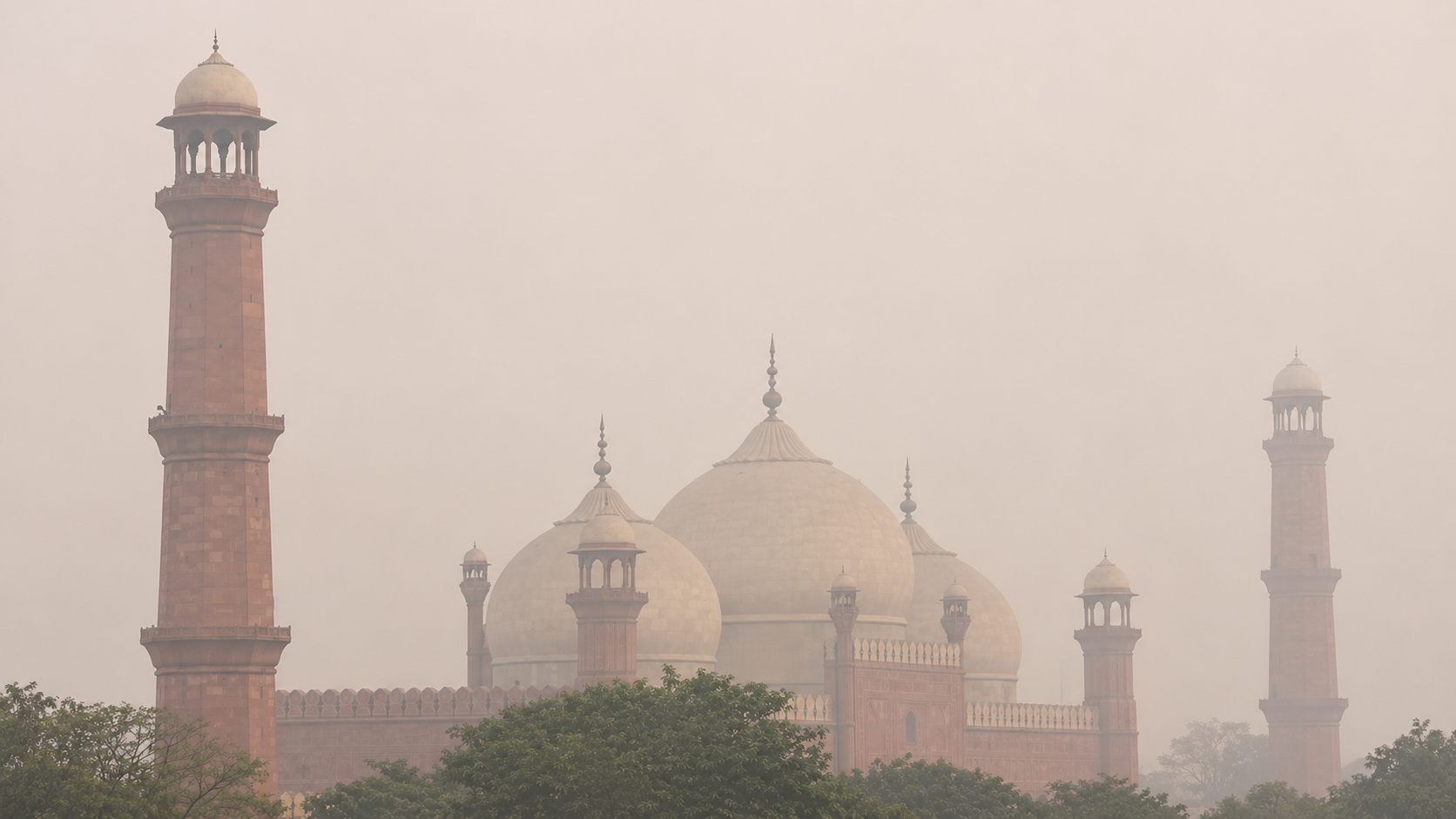
Lahore: Lahore recorded an average Air Quality Index (AQI) of 268 during the first week of November, with pollution reaching 335 on November 2, according to data released by the Pakistan Air Quality Initiative (PAQI).
The findings indicate that residents were exposed to elevated concentrations of fine particulate matter, known as PM2.5, as seasonal weather conditions restricted the dispersal of pollutants. PAQI reported that air quality remained in the very unhealthy category for five days and reached hazardous levels on two days during the period.
The average PM2.5 concentration stood at 215.5 micrograms per cubic metre, more than 14 times the World Health Organisation's (WHO) 24 hour guideline level of 15 micrograms per cubic metre. PM2.5 consists of airborne particles small enough to enter the lungs and bloodstream. Prolonged exposure is associated with respiratory and cardiovascular diseases, while children, older people and those with existing health conditions face greater risks.
Fire incidents and weather conditions
The analysis recorded an average of 54.8 fire incidents per day across Lahore during the first week of November. On days when at least 11 fires were reported, the average AQI was 207, compared with 158 on other days.
Although the figures indicate an association between fire activity and pollution, they do not establish how much of the city's particulate pollution was directly caused by these incidents. The report also identified falling night-time temperatures and reduced wind speeds as factors contributing to the accumulation of pollutants.
During colder months, temperature inversions can restrict the movement of air near the ground, trapping emissions from traffic, industry, waste burning and other sources. These conditions can cause pollution concentrations to rise even without a corresponding increase in emissions.
Pollution increases compared with last year
According to PAQI, average PM2.5 concentrations during the first week of November were 25 per cent higher than in the corresponding period of 2025. The increase indicates that Lahore entered this year's smog season with greater particulate pollution than during the same period last year.
The analysis also examined the possible contribution of winds arriving from India. It found that the average AQI was 160 on days when the contribution of winds from India was higher, compared with 187 on other days.
These findings suggest that local emissions and weather conditions played a significant role in the pollution recorded during the study period. However, wind direction comparisons alone cannot determine the precise geographical origins of pollutants or exclude cross-border contributions.
Lahore faces pollution beyond winter
Separate data from SmogRank showed that fine particulate concentrations during the period were approximately 3.2 times higher than the city's annual average. The findings also indicated that Lahore experiences air pollution throughout the year, although November and December typically record the highest concentrations.
This distinction is important because smog is often treated as a winter emergency, despite pollution sources operating throughout the year. Vehicle exhaust, industrial emissions, construction dust, waste burning and other combustion activities contribute to the city's pollution burden.
Winter weather can intensify their effects by limiting atmospheric dispersion. The reported figures therefore point to a combination of recurring emissions and seasonal conditions rather than a problem confined to a few weeks.
Implications for public health and policy
The WHO's air quality guidelines recommend limiting exposure to fine particulate matter because of its effects on human health. An AQI of 268 falls within the very unhealthy category under the US AQI scale, while readings above 300 are classified as hazardous.
At these levels, health authorities generally advise reducing outdoor exposure, particularly for vulnerable groups. The findings underline the need for pollution control measures that address emissions throughout the year rather than relying solely on temporary restrictions during smog episodes.
These include monitoring industrial emissions, reducing open burning, improving transport-related pollution controls and strengthening air quality monitoring.
For Lahore, the challenge is not limited to responding when AQI readings reach hazardous levels. It also involves reducing the emissions that allow pollution to accumulate when temperatures fall and winds weaken.
The latest data places renewed attention on the effectiveness of existing measures as Punjab enters the months traditionally associated with its highest air pollution levels.