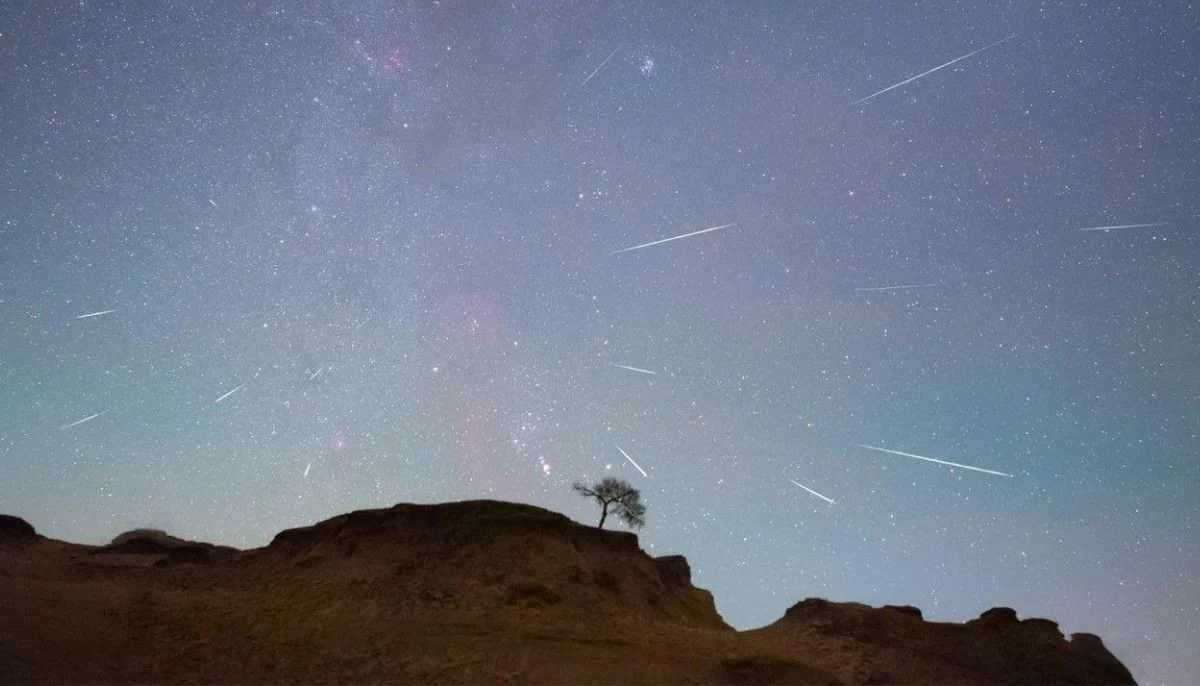
London: The annual Orionid meteor shower has begun, offering skywatchers a chance to see bright streaks produced by debris from Halley’s Comet as Earth passes through its trail.
The shower is active from 2 October until 7 November, with its peak expected overnight on 21 to 22 October. The best viewing period is after midnight and before dawn.
The spectacle extends beyond Britain. According to NASA, Orionids are visible from both the northern and southern hemispheres, meaning viewers in Pakistan can also watch where skies are clear and sufficiently dark.

NASA lists a typical rate of around 10 to 20 meteors an hour under dark skies. Actual sightings depend on cloud cover, light pollution and moonlight.
This year, a bright waxing gibbous Moon will interfere with viewing around the peak, according to the Royal Observatory Greenwich. Fainter meteors may therefore be difficult to spot.
Observers should choose a safe, open location away from streetlights, allow roughly 30 minutes for their eyes to adjust and watch a broad area of sky. No telescope or binoculars are needed.
Although the meteors appear to originate near the constellation Orion, they can streak across different parts of the sky. Watching only Orion could mean missing others.
The particles enter Earth’s atmosphere at approximately 66 kilometres per second. As they disintegrate, they produce luminous streaks, sometimes leaving glowing trails that persist for seconds or minutes.
Halley’s Comet last appeared in 1986 and will return in 2061, completing an orbit roughly every 76 years. Its lingering debris produces the Orionids each October and the Eta Aquarids in May.
Observers who miss the peak can still try on nearby nights, as Orionid activity extends across several days around the maximum.