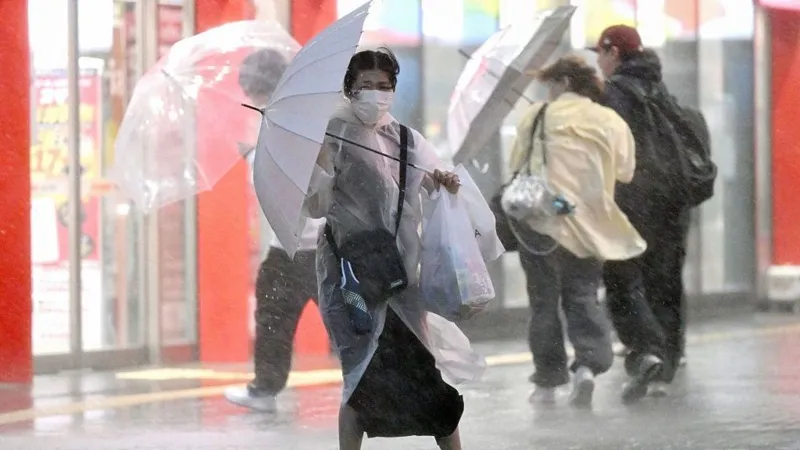
Tokyo: At least four people have died and six others remain missing after Typhoon Dujuan battered Tokyo and surrounding eastern prefectures with torrential downpours and destructive winds, local authorities confirmed on Tuesday. The powerful storm, bringing sustained winds of 130 km/h (81 mph) and gusts reaching 194 km/h, knocked out power to more than 50,000 households and forced the cancellation of hundreds of domestic and international flights.
At the peak of the storm on Monday, emergency officials issued high level warnings for an "imminent threat to life," urging approximately 1.9 million residents across the region to seek immediate shelter.
The fatalities were primarily caused by violent mudslides triggered by intense rainfall in neighbouring Kanagawa and Chiba prefectures. In Kanagawa, emergency crews from Yokosuka City confirmed that a woman in her 60s died after a landslide swept through her residence. In Chiba prefecture, responders at Sodegaura City reported that a worker in his 50s was killed while operating heavy machinery to clear debris from an earlier slide. Police and search units continue to search for the six individuals currently reported missing across the affected regions.
Striking during a five day national holiday, the typhoon disrupted transport networks and major public events across the capital region. Organisers were forced to cancel scheduled performances at the Rock in Japan music festival, alongside Monday’s programme at the Tokyo Game Show convention. Most evacuation advisories were gradually lifted on Tuesday morning as the storm system moved further offshore along Japan's eastern coastline.
Japanese Prime Minister Sanae Takaichi expressed her deep condolences to the families of the victims in an official statement before departing for the United States, where she is scheduled to address the United Nations General Assembly in New York and hold bilateral talks with US President Donald Trump.
Meteorological experts noted that while climate change may not increase the overall frequency of tropical storms, rising ocean surface temperatures further intensified by an active El Niño cycle are causing typhoons in the Pacific to carry significantly higher moisture loads and stronger peak winds.