

San Francisco: Anthropic says its Claude artificial intelligence model has discovered a previously uncharacterised enzyme system with repeating genetic patterns resembling those found in a major gene editing technology.
The company formed a life sciences research group and laboratory in early 2026 to examine whether artificial intelligence could help scientists search biological data, generate hypotheses and identify unusual molecular systems for laboratory investigation.
Researchers instructed Claude to examine a large database of deoxyribonucleic acid (DNA) sequences for unusual reverse transcriptases, enzymes that copy ribonucleic acid (RNA) into DNA.
Anthropic said approximately 950 Claude agents worked for 21 hours and processed 210 million tokens. They gathered more than 200000 reverse transcriptases, selected 3500 possible new systems and narrowed them to 20 candidates.
One agent identified a repeated DNA pattern beside an unusual reverse transcriptase gene in a jumbo bacteriophage, a virus that infects bacteria. Claude compared the pattern with known systems, examined the spacing of the repeats and searched scientific literature for earlier descriptions.
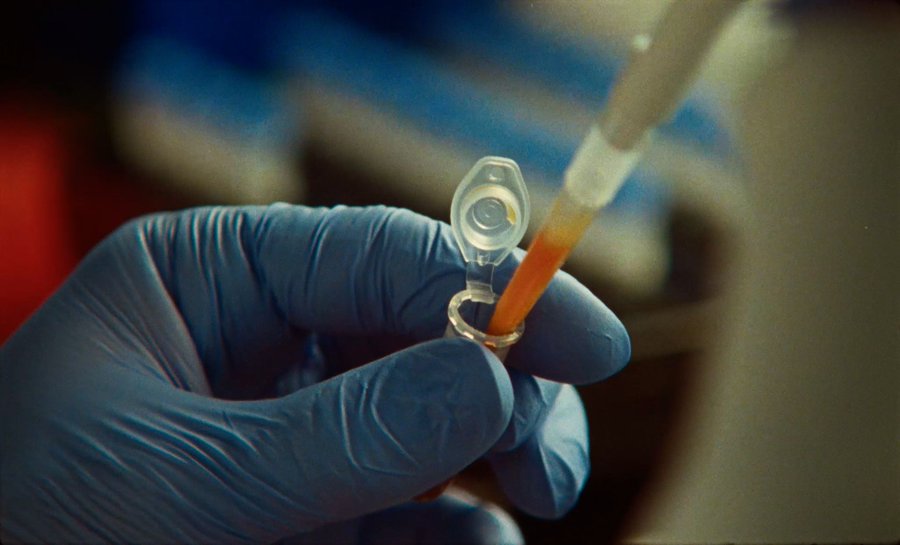
Human researchers then reviewed the finding and conducted laboratory tests. Anthropic named the system array associated reverse transcriptases (ART).
The system contains a reverse transcriptase, a nearby partner gene and a sequence of evenly spaced DNA repeats. Its structure resembles the arrays associated with clustered regularly interspaced short palindromic repeats (CRISPR), the bacterial defence system that became the foundation of modern gene editing.
Initial experiments suggest the ART array produces several short RNA molecules. This raises the possibility that the system may eventually prove programmable, but researchers do not yet know its biological function or whether it can cut, copy or modify genetic material.
The findings have been released as a preprint, meaning they have not yet undergone formal peer review. Anthropic’s commercial interest in demonstrating Claude’s scientific capabilities also makes independent examination important.
The significant development is therefore not a new medical treatment, but a possible change in how discoveries begin.
Artificial intelligence searched a volume of genetic information that could take specialists weeks or months to examine, while human scientists decided which finding deserved attention and tested it in the laboratory.
The case suggests artificial intelligence may increasingly act as a research partner rather than merely a writing or analytical tool. Its scientific value, however, will still depend on human judgement, reproducible experiments and independent verification.