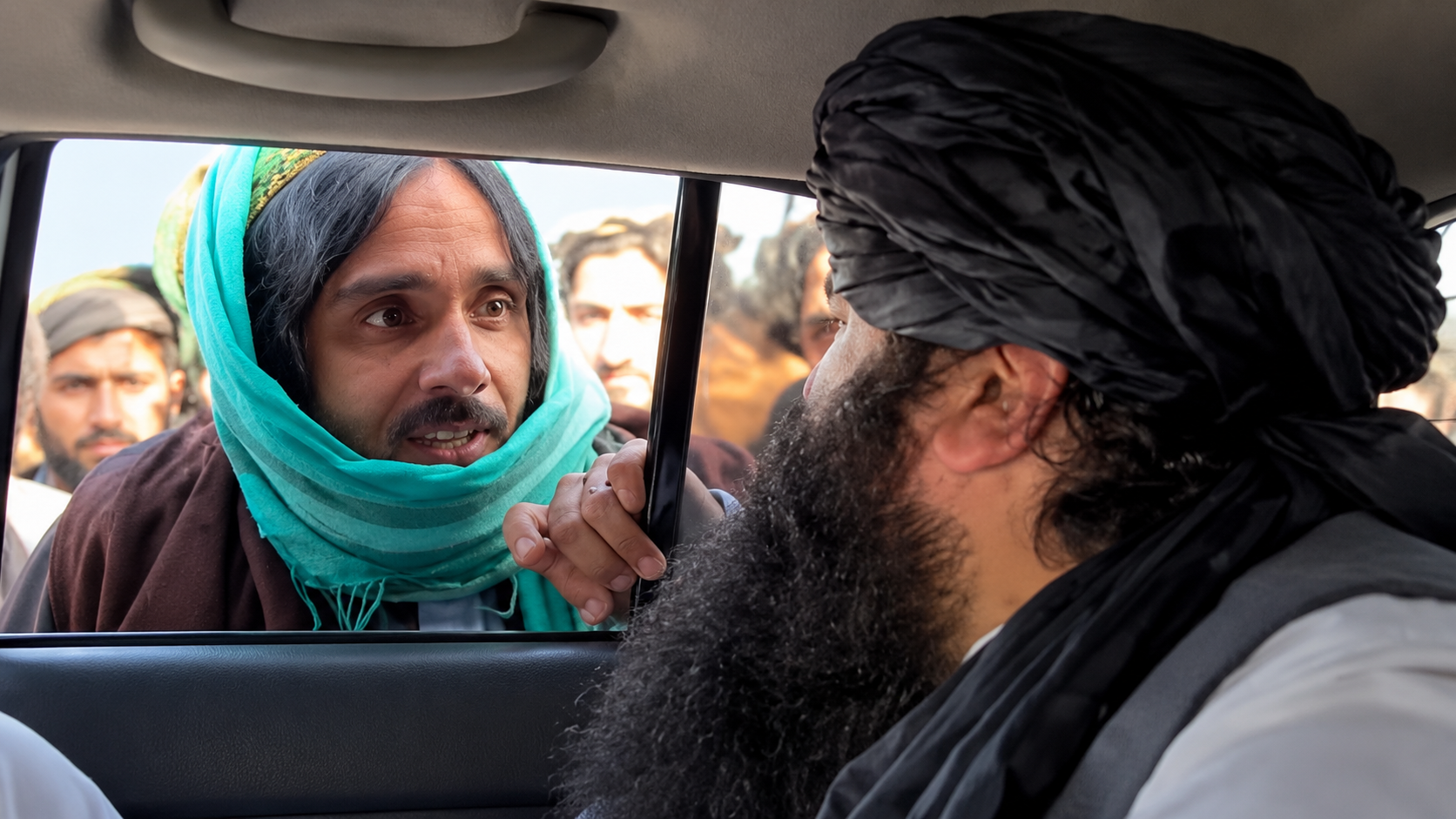
Khost: A video circulating online reportedly shows a man identifying himself as a member of the banned Tehreek i Taliban Pakistan (TTP) during an apparent meeting with Afghanistan's Taliban Interior Minister Sirajuddin Haqqani in Khost province.
In the footage, the man introduces himself as Zabihullah and says he belongs to Kotkai in South Waziristan, Pakistan. He also claims affiliation with the TTP factions associated with Hakimullah Mehsud and Qari Hussain.
“My name is Zabihullah, I am from Kotkai, South Waziristan, affiliated with the TTP’s Hakimullah Mehsud and Qari Hussain factions,” the man is reported to have said.
The circumstances of the meeting, including when the video was recorded and whether the man's claimed organisational affiliation has been independently verified, remain unclear.
If authenticated, the footage would raise questions about how an individual openly identifying himself with the TTP was able to attend a gathering involving a senior Taliban official inside Afghanistan. The video does not, by itself, establish that Haqqani knew the man's identity or affiliations beforehand, or that Taliban authorities provided him with protection or operational support.
The reported meeting comes amid a deepening dispute between Pakistan and Afghanistan over the presence of Pakistani militant groups on Afghan territory. Islamabad has repeatedly accused the Taliban administration of allowing the TTP and other armed groups to maintain sanctuaries in Afghanistan and use them to organise attacks across the border.
Kabul has consistently rejected the allegations, insisting that Afghan territory is not being used to threaten neighbouring countries. On October 24, Pakistan's Ministry of Information and Broadcasting renewed its demand for verifiable action against militant organisations, including the TTP and the Balochistan Liberation Army (BLA).
The ministry said Afghanistan's Taliban authorities had a responsibility to prevent their territory from being used to plan or launch attacks against Pakistan. It also referred to international security assessments concerning the TTP's presence in Afghanistan.
A day earlier, Taliban spokesperson Zabihullah Mujahid rejected Pakistan's accusations, arguing that Islamabad was holding Afghanistan responsible for its own domestic security problems.
The latest footage, if its location and participants are independently confirmed, would provide a specific example of an individual claiming TTP membership appearing at a gathering attended by a senior Afghan Taliban official.
That would be significant in the context of Kabul's repeated assurances that it does not permit militant groups to operate against Pakistan from Afghan soil. However, the footage alone cannot establish the man's movements within Afghanistan, the nature of his activities or any official support he may have received.
TTP presence remains central to border tensions
The TTP, which is separate from but ideologically aligned with the Afghan Taliban, has carried out attacks against Pakistani security forces and other targets for years.
Relations between Islamabad and Kabul have deteriorated considerably since the Taliban returned to power in Afghanistan in August 2021, with cross border militancy emerging as one of the principal sources of tension.
The dispute has contributed to border confrontations, Pakistani military operations and repeated diplomatic exchanges between the two governments. Pakistan has also cited a US government report covering January to March 2026, which estimated the TTP's strength at between 4000 and 6000 fighters and described its ability to operate from Afghanistan.
The reported appearance of Zabihullah at the Khost gathering adds another element to the dispute, particularly because of his claimed links to factions associated with two prominent figures in the TTP's history.
Hakimullah Mehsud, a former TTP chief, and Qari Hussain, a senior militant commander, were associated with the organisation during an earlier period of its insurgency. The man's reference to their factions does not independently establish his present position within the group.
It remains unclear whether Afghan authorities have commented on the video or the identity of the individual appearing in it.
The central questions are whether the footage is authentic, whether the man is an active TTP member and what circumstances allowed him to attend the reported meeting in Khost.
For Pakistan and Afghanistan, those questions bear directly on their continuing disagreement over militant activity, territorial responsibility and security along their shared border.