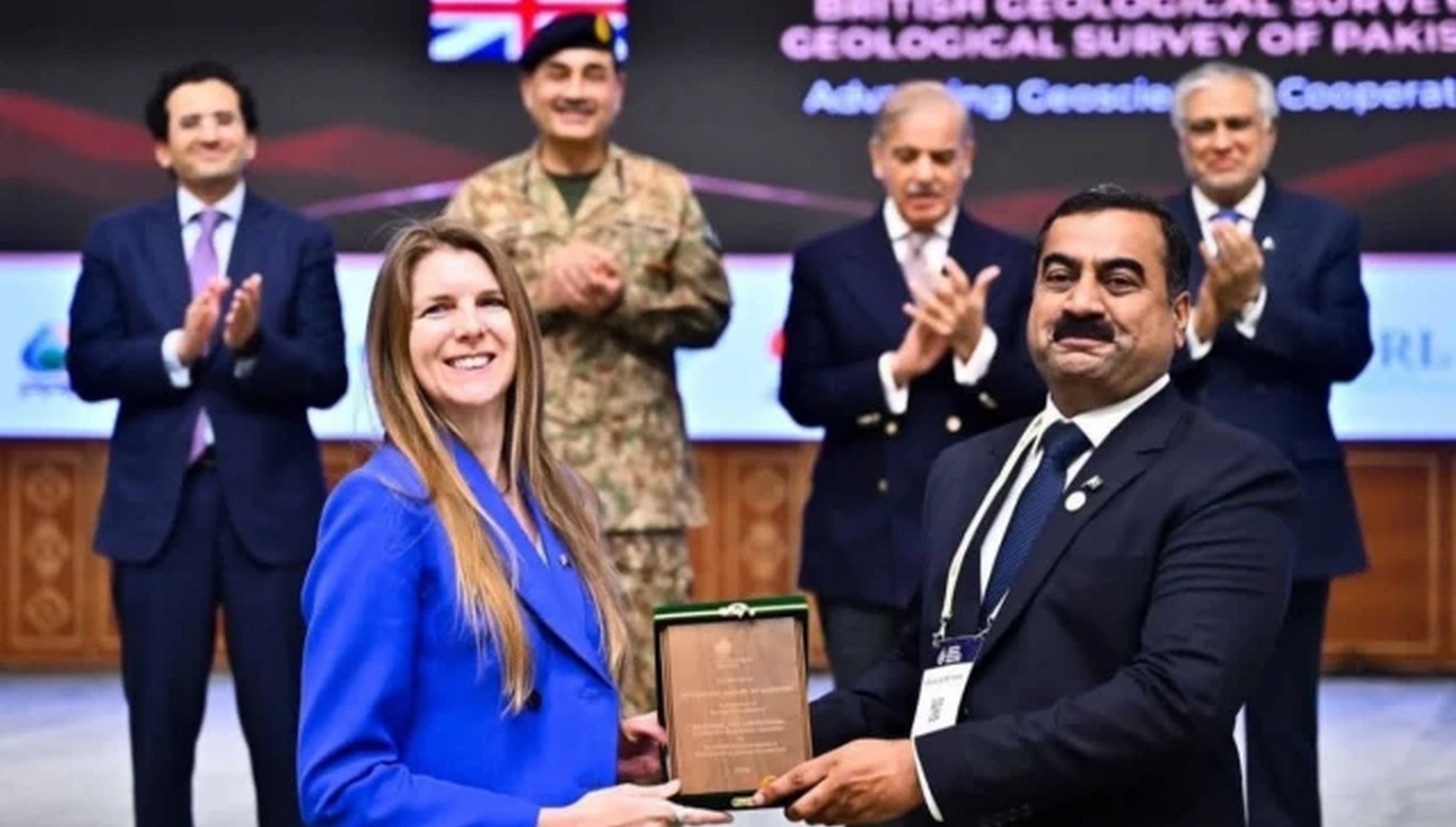
Islamabad: The Geological Survey of Pakistan (GSP) and the British Geological Survey (BGS) have drafted an agreement to map Pakistan’s mineral resources, share data and conduct research, the British High Commission said on November 17. British High Commissioner Jane Marriott outlined the proposal at the Pakistan Minerals Investment Forum at Islamabad’s Jinnah Convention Centre on November 13.
The proposed memorandum of understanding (MoU) would cover critical minerals and the environmental effects of mineral development. The High Commission did not give a timetable for approval or say which areas the surveys would map first.
Pakistan has deposits of copper, gold, coal, chromite and salt, but mining accounts for less than 2 per cent of gross domestic product (GDP), according to the High Commission. Marriott said investors need data they can use to assess deposits and that developing the sector should create jobs in communities near mines and support exports without compromising environmental safeguards.
International Geoscience Services (IGS) delivered the training through the United Kingdom’s Revenue Mobilisation, Investment and Trade (REMIT) programme. Launched in April, the programme taught GSP staff how to collect and analyse samples, use aircraft and satellite data to study geology, and turn field observations into maps. The work is intended to help the survey design and carry out future investigations without relying on outside teams.
The forum also saw announcements on mineral testing and exploration. Mari Minerals and Britain’s MSALABS formed a joint venture to establish a laboratory in Pakistan that would test mineral samples. Pakistan’s geological survey also pursued co operation with counterparts in Germany, Japan and Türkiye.
The proposed survey partnership concerns the work that comes before a mine is approved. Maps and sample data can help identify where to explore and whether a deposit warrants further study. They do not establish on their own that a deposit can be mined at a profit or that a project should go ahead.