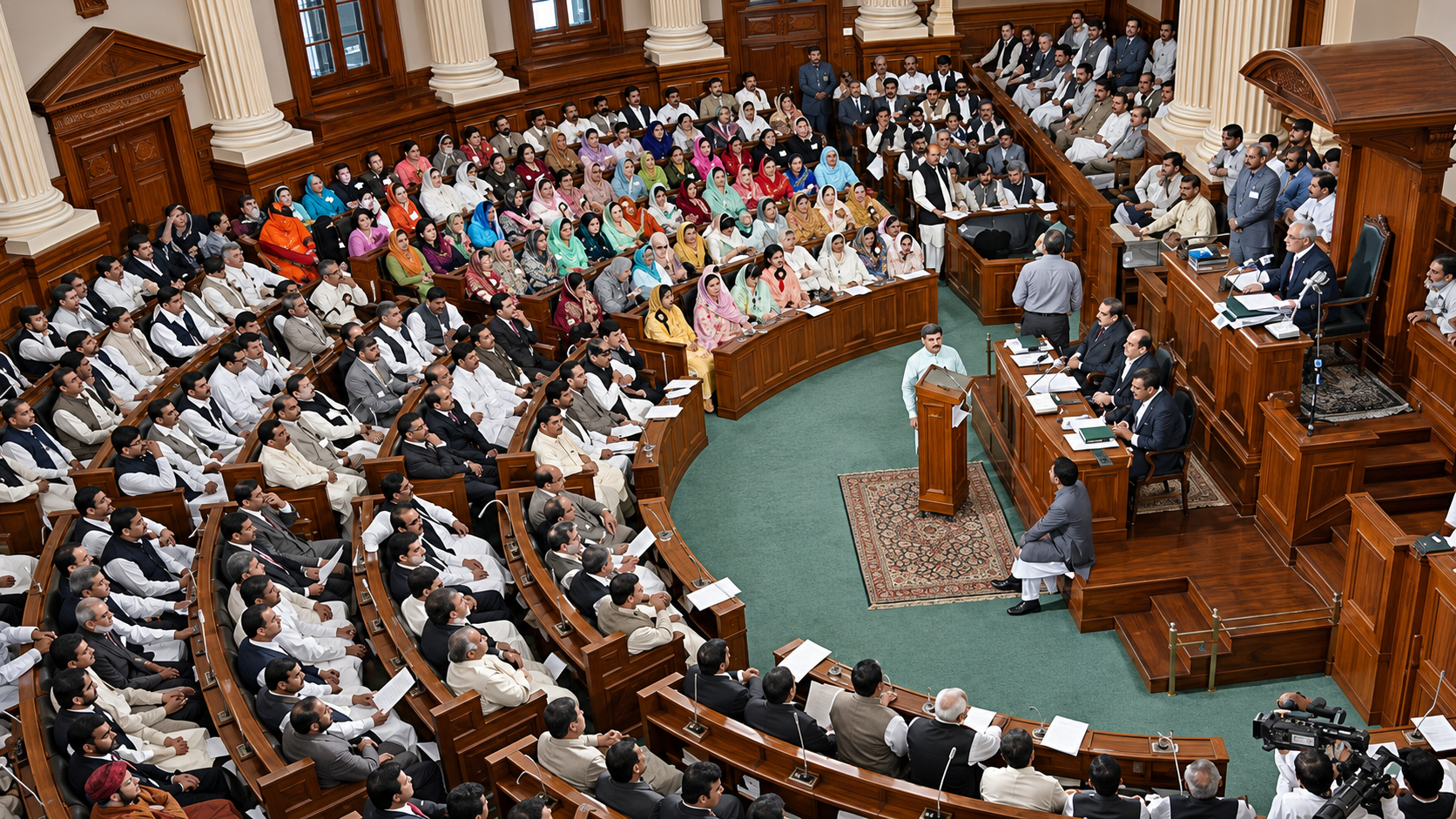
Lahore: Two Punjab Assembly committees on Tuesday approved legislation aimed at addressing child begging and reducing delays in court proceedings, proposing prison sentences for parents and guardians who exploit children and a mediation system for resolving disputes within 30 days.
The Punjab Assembly's Committee on Home Affairs, chaired by MPA Safdar Hussain Sahi, unanimously approved the Punjab Vagrancy (Amendment) Bill, 2026, while the Standing Committee on Law, headed by MPA Muhammad Arshad Malik, endorsed the Punjab Alternative Dispute Resolution (ADR) Bill, 2026.
Both measures seek to amend existing legal arrangements by strengthening enforcement against child exploitation and establishing a framework for settling specified disputes outside conventional court proceedings. Punjab proposes prison terms for parents involved in child begging Under the amendments to the Punjab Vagrancy Ordinance, 1958, the age threshold for child protection would increase from 14 to 16 years.
Parents and guardians found involving children in begging, allowing others to use them for the purpose or failing through negligence to prevent their exploitation would face imprisonment ranging from three months to three years.
The bill would designate the director general of Punjab's Social Welfare and Bait ul Maal Department as the controller responsible for coordinating operations against begging, overseeing rehabilitation programmes and monitoring welfare centres.
The controller would also maintain a database of individuals taken into custody, issue standard operating procedures and coordinate enforcement among government departments.
The proposed legislation would replace an amending ordinance issued earlier in 2026, incorporating its provisions into provincial law through the legislative process.
Punjab had already introduced measures against organised begging, including penalties for individuals and groups involved in exploiting children. The amendments seek to extend protection to children aged 14 and 15 and assign responsibility to their parents or guardians. However, implementation raises questions about the treatment of families living in poverty.
While the legislation seeks to prevent children from being used for begging, its provision concerning parental negligence could affect households unable to meet their basic needs. The effectiveness of the proposed changes will therefore depend partly on rehabilitation facilities, social welfare assistance and the availability of resources to support affected children and families.
Punjab proposes mediation to resolve disputes within 30 days
In a separate development, the Punjab Assembly's Standing Committee on Law unanimously approved legislation proposing a system for resolving specified civil, family, property, inheritance and financial disputes through mediation.
Parliamentary Secretary for Law Khalid Mahmood Ranjha attended the committee meeting alongside assembly officials and representatives of government departments. Under the Punjab ADR Bill, 2026, eligible disputes could be referred to trained mediators to help the parties reach an agreement without completing conventional court proceedings.
The proposed mediation process would normally conclude within 30 days, with an extension allowing a total period of up to 60 days where required. If the parties reach a settlement, it would be submitted to the relevant court for approval and enforcement. Cases in which mediation fails would return to the judicial process.
The framework would also cover certain minor criminal offences that can legally be settled through agreement between the parties. The bill provides for confidentiality during mediation and would permit overseas Pakistanis to participate in proceedings through video conferencing. It also proposes the appointment of female mediators, where possible, in disputes involving women.
Authority to oversee mediation process
The proposed law provides for the establishment of a Punjab Alternative Dispute Resolution Authority, headed by a retired High Court judge. The authority would regulate mediation services, oversee the training and performance of mediators and monitor the implementation of the system.
The measure forms part of provincial efforts to reduce the number of cases pending before courts and lower the time and expense involved in litigation. Mediation could offer an alternative for parties willing to negotiate settlements, particularly in property, inheritance and financial disputes.
However, the system's effectiveness would depend on access to trained mediators, safeguards for participants and mechanisms ensuring that settlements are reached without coercion. The proposed legislation also preserves the role of courts in approving agreements, providing a legal basis for their enforcement.
What happens next?
The approval of both bills by their respective committees marks a stage in the provincial legislative process. Committee approval alone does not constitute final enactment. The measures must proceed through the relevant Assembly procedures before becoming legislation.
If enacted, the vagrancy amendments would expand the scope of child protection and strengthen the government's enforcement responsibilities, while the ADR framework would establish a system intended to resolve eligible disputes through mediation.
The two measures address different aspects of governance, but both place additional responsibilities on provincial departments. Their implementation will depend on administrative coordination, funding, staff training and oversight to ensure that enforcement and dispute resolution mechanisms operate as intended.