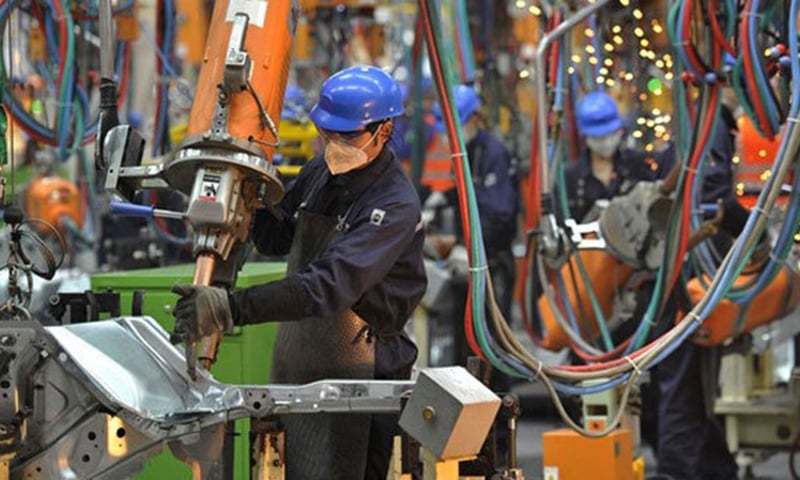
Islamabad: Pakistan’s large scale manufacturing output rose 2.07 per cent from a year earlier in the first quarter of the 2026 to 27 financial year, according to data released by the Pakistan Bureau of Statistics on Thursday.
Automobile production rose 32.67 per cent in the three months to September, while garment output increased 17.03 per cent and petroleum products rose 12.73 per cent. Garments contributed 2.91 percentage points to growth, ahead of automobiles at 1.26 points and petroleum products at 0.98 points. The contribution from garments alone exceeded the increase in the overall index because declines elsewhere offset part of the gains.
Food production fell 9.43 per cent, reversing growth of 6.30 per cent in the same quarter a year earlier. The decline cut 1.26 percentage points from the overall growth rate, more than any other sector. Output also fell in pharmaceuticals by 12.25 per cent, iron and steel products by 11.77 per cent and chemicals by 9.55 per cent.
The figures showed a split between garments and textiles, which the bureau tracks separately. Textile output fell 4.08 per cent in the quarter even as cotton yarn production rose 2.95 per cent. Cotton cloth production was little changed. Textiles account for 18.16 per cent of the manufacturing index, the largest share of any sector.
In September, manufacturing output rose 2.45 per cent from a year earlier and 3.18 per cent from August. The annual growth rate picked up from 0.65 per cent in August but remained below July’s 3.03 per cent. The index stood at 116.79 in September, up from 114.00 a year earlier.
Automobile output illustrates the difference between rising production and a slowing rate of growth. The sector produced more than it did a year earlier, but its quarterly growth rate was below the 84.61 per cent recorded in the corresponding period last year.
Manufacturing output grew 4.98 per cent over the whole of 2025/26. The first quarter figures for the new financial year show production continued to rise overall, even as food, textiles and several other industries produced less than they did a year earlier.