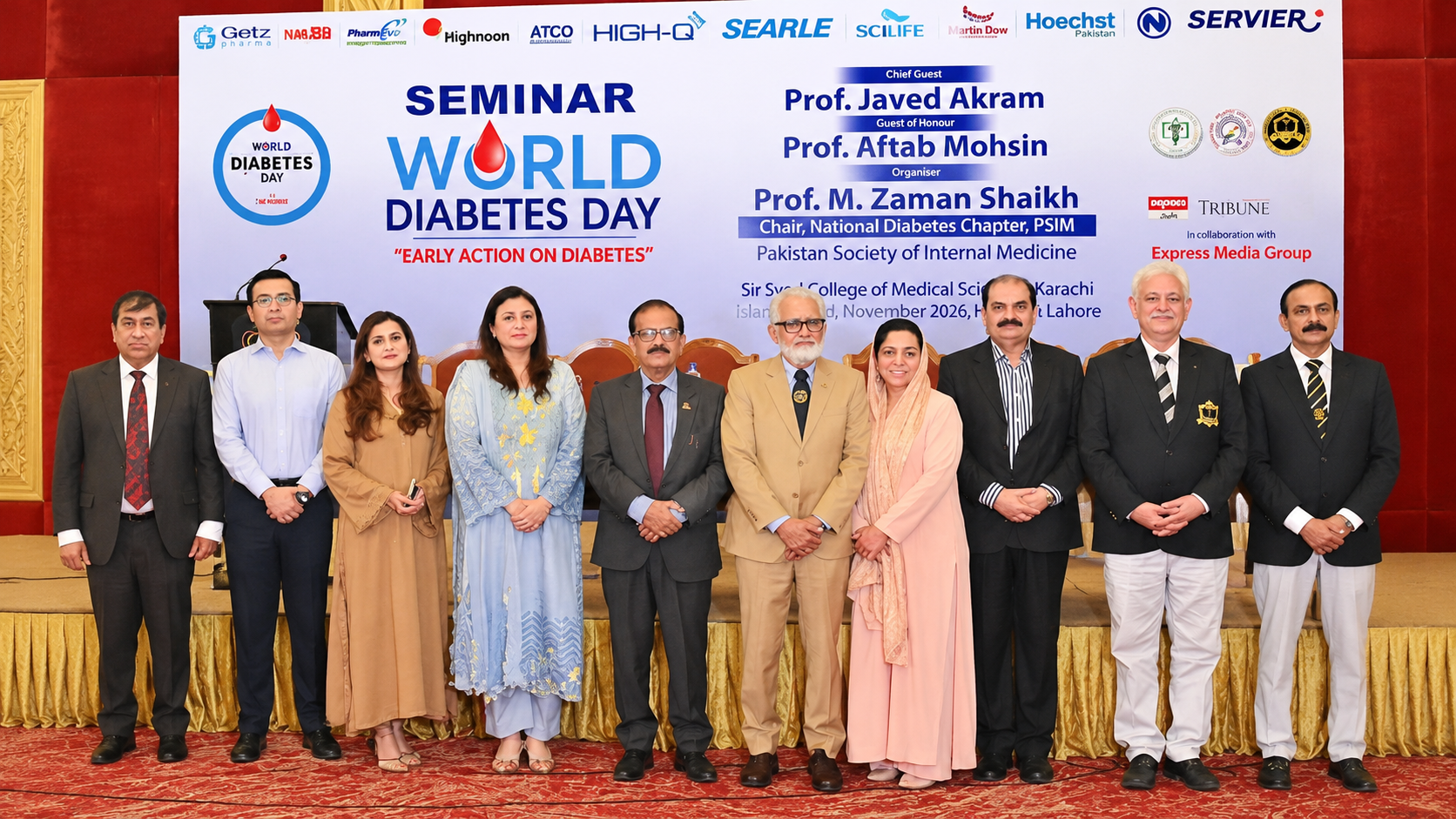
Lahore: Medical experts have called for measures to improve diabetes prevention and early diagnosis in Pakistan, warning that the growing number of cases poses challenges for the country's healthcare system.
The concerns were raised at a seminar titled Early Action on Diabetes, organised to mark World Diabetes Day by the Pakistan Society of Internal Medicine (PSIM) and Sir Syed College of Medical Sciences, Karachi, in collaboration with Express Media Group.
The event brought together doctors, medical students and members of the public to discuss diabetes awareness, screening and the importance of managing risk factors before complications develop. PSIM Patron in Chief Professor Javed Akram attended as chief guest, while the society's president, Professor Aftab Mohsin, was the guest of honour. The seminar was organised by Professor M Zaman Shaikh, chairman of the PSIM National Diabetes Chapter.
Addressing participants, Professor Akram warned that a substantial proportion of Pakistan's population was affected by diabetes, with many patients unaware of their condition. He claimed that around 80 per cent of people in Pakistan had diabetes and that half of them remained undiagnosed. However, this figure was not supported by data presented in the report and should not be treated as an established national prevalence estimate.
Akram said the risk of developing diabetes increased among people with a family history of the condition. He stressed that delayed diagnosis could expose patients to complications affecting multiple organs. He urged the government and individuals to take responsibility for reducing the disease burden through awareness, screening and changes in daily habits.
According to Akram, maintaining a healthy weight and engaging in regular physical activity could help reduce the risk of developing type 2 diabetes and support disease management among those already diagnosed.
The seminar's focus on early action highlighted the importance of identifying diabetes before complications emerge. Type 2 diabetes can develop gradually, with some people experiencing few noticeable symptoms during its early stages. Screening is therefore particularly relevant for individuals with recognised risk factors, including a family history of diabetes.
Without appropriate management, diabetes can increase the risk of cardiovascular disease, kidney damage, vision problems and nerve complications. Medical experts emphasised that prevention and treatment require sustained efforts rather than awareness campaigns alone.
The discussion also drew attention to the role of healthcare providers in helping patients understand their risk, access testing and manage the condition through medical care and lifestyle measures. Pakistan's diabetes burden has implications for healthcare expenditure, workforce productivity and access to treatment, particularly where patients are diagnosed after complications have developed.
The seminar was supported by several pharmaceutical companies, including Getz Pharma, Nabiqasim Pharma, Martin Dow, ATCO, HIGH Q, Highnoon, PharmEvo, Hoechst Pakistan, Searle, Scilife and Servier. Organisers said the programme aimed to promote awareness of diabetes and encourage action to reduce its impact on individuals and the healthcare system.