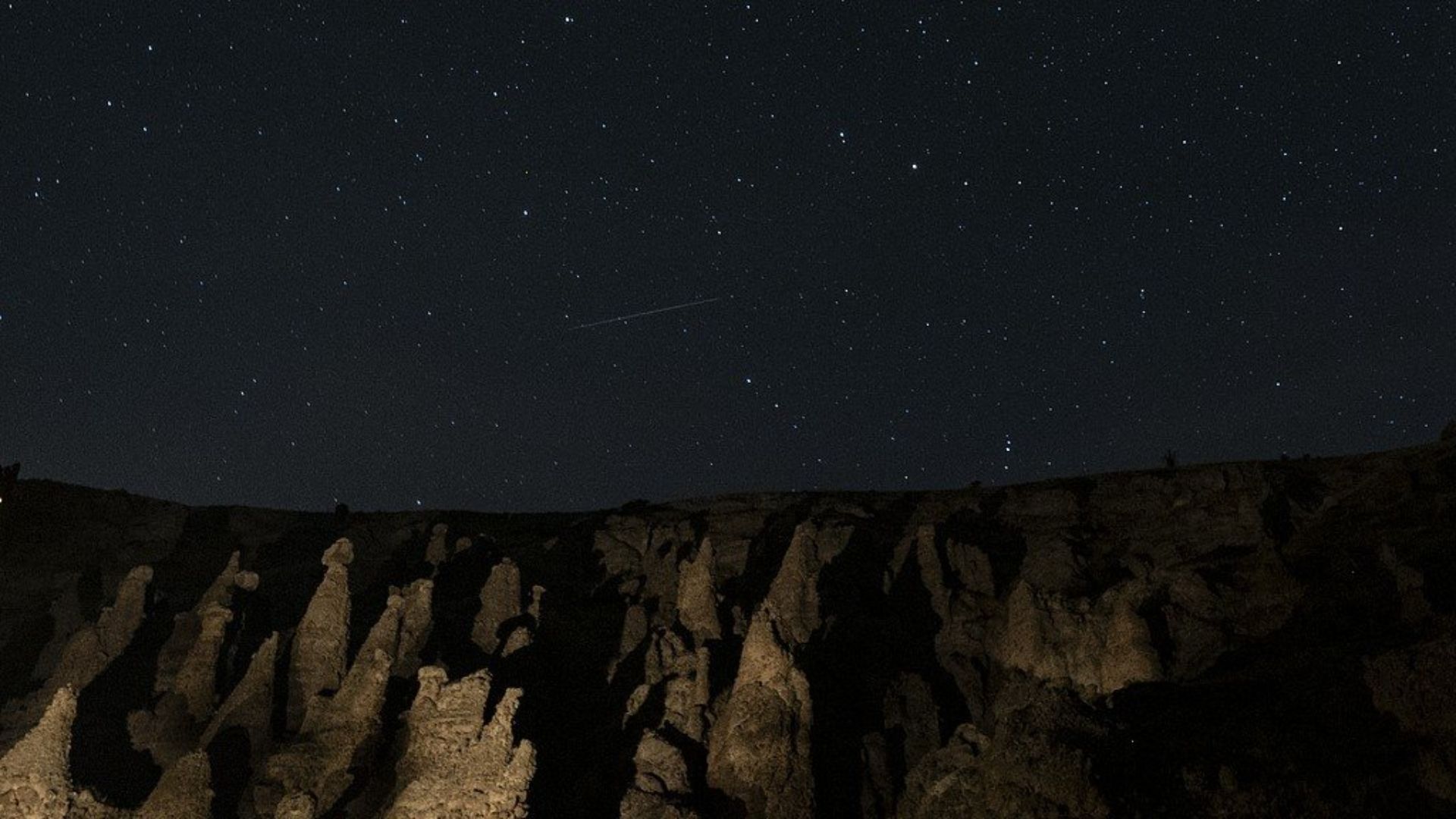
The Orionid meteor shower is expected to peak on the night of October 21 to 22, offering skywatchers a chance to see fast, bright streaks produced by debris from Halley’s Comet entering Earth’s atmosphere. The shower is visible from both hemispheres, putting Pakistan within its viewing region, subject to weather and local conditions.
A meteor is the flash or streak of light produced when a small piece of space debris enters the atmosphere at high speed and heats up as it disintegrates. Although commonly called shooting stars, meteors have nothing to do with stars falling from the sky.
The debris itself is called a meteoroid while it remains in space. If a fragment survives its passage through the atmosphere and reaches the ground, it is called a meteorite. Most small particles associated with cometary meteor showers burn up before reaching the surface.
A meteor shower occurs when Earth passes through a concentration of such debris, producing more meteors than observers would normally see.
The Orionids take their name from Orion, the constellation containing the point from which their paths appear to spread across the sky. This apparent starting point is called the radiant. Orion provides a visual reference; the particles themselves come from Halley’s Comet.
As the comet travels through the inner solar system, it sheds material that spreads along its orbit. Earth encounters this debris twice each year, producing the Orionids in October and the Eta Aquariids in May.
According to the CGTN report, the Orionids are active from October 2 to November 7. Their particles enter the atmosphere at approximately 66 kilometres per second. Some produce glowing trails that linger for several seconds or minutes, while particularly bright meteors appear as fireballs.
Under ideal dark skies, observers could see around 10 to 20 meteors per hour. That figure is an estimate rather than a guaranteed viewing rate: clouds, light pollution and moonlight can substantially reduce visibility.
This year’s waxing gibbous moon, meaning it is more than half illuminated and approaching full moon, will obscure some fainter meteors. NASA recommends looking before dawn after moonset, rather than relying on a single advertised peak time.
For the best view, choose a safe, dark location away from streetlights, with an unobstructed stretch of sky. No telescope is needed. Allow roughly 20 to 30 minutes for your eyes to adjust, settle comfortably and scan a broad area rather than concentrating on one point.