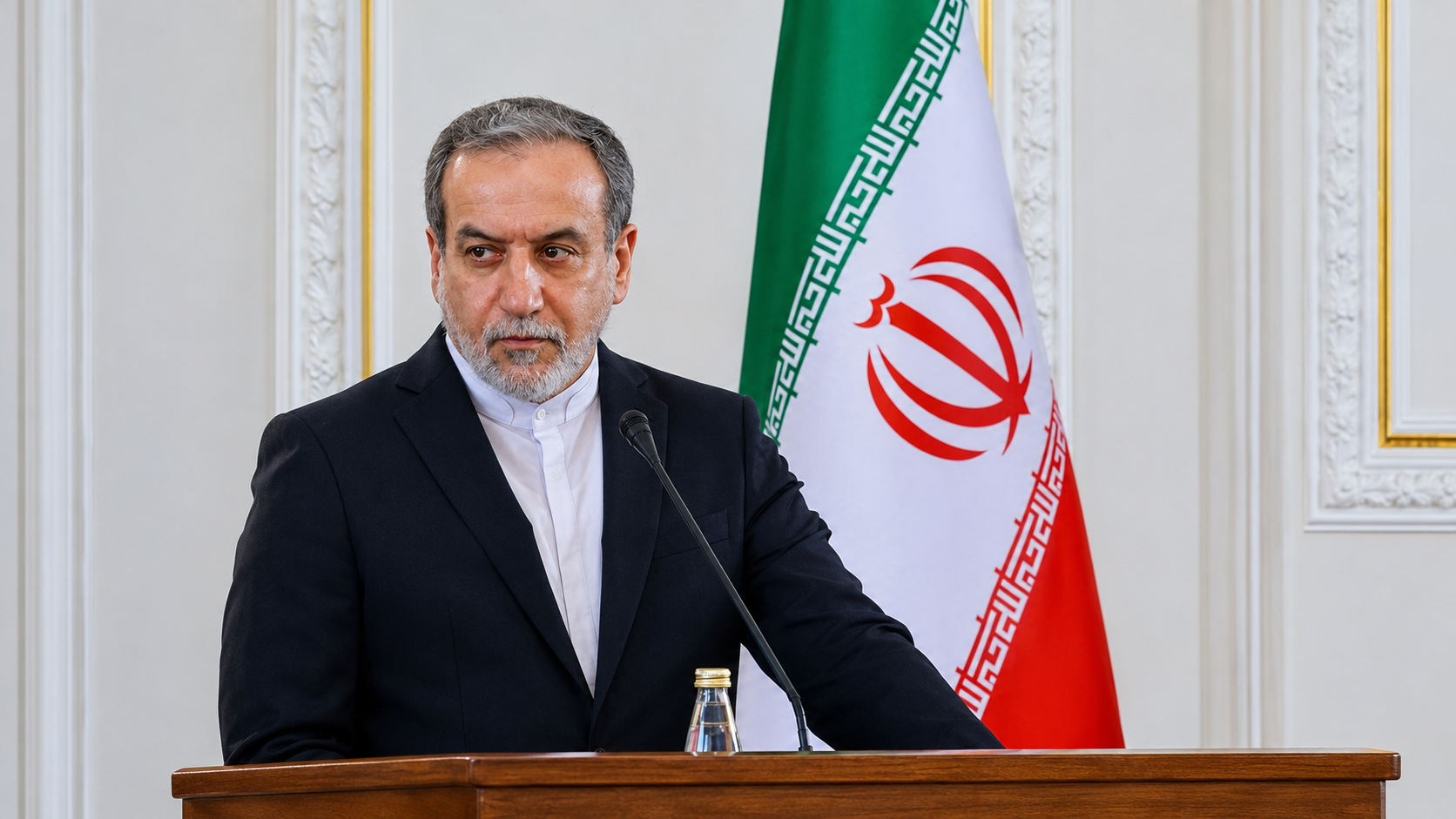
Tehran: Iranian Foreign Minister Abbas Araghchi said Tehran remains committed to finding a diplomatic solution to its war with the United States, but President Donald Trump rejected the terms Iran is currently proposing.
Speaking at a White House press conference on Friday, Trump said Iran wanted an agreement but was unwilling to accept conditions acceptable to Washington.
The conflicting positions emerged as Pakistan and Qatar continued efforts to facilitate negotiations between the two countries.
Araghchi told Iran's state owned newspaper Iran Daily that Tehran was still exchanging messages with Washington through mediators.
He said Iran wanted an agreement that would prevent another war and was seeking assurances that the United States was genuinely committed to negotiations.
Iran insists on retaining enriched uranium
Araghchi said keeping Iran’s enriched uranium stockpile within the country remained a central condition for any agreement.
However, he indicated that a compromise could be reached over how the nuclear material would be managed.
Iranian authorities previously discussed possible arrangements, including diluting highly enriched uranium under the supervision of the International Atomic Energy Agency (IAEA).
Araghchi maintained that any solution must safeguard Iran's national interests while addressing the country's requirements.
According to the IAEA, Iran possessed approximately 440.9 kilogrammes of uranium enriched to 60 per cent before Israeli and American strikes on Iranian nuclear facilities in June 2025.
The agency was not established how much of that material survived the attacks.
Trump says proposed deal is unacceptable
Trump said on Friday that Iran was interested in negotiations but did not present terms he was prepared to accept.
He reiterated that Washington wanted a substantive agreement and insisted that Iran must never acquire a nuclear weapon.
The US president's remarks highlighted continuing disagreements over the nuclear programme and the conditions for ending hostilities.
Washington and Tehran also remained divided over restrictions on shipping through the Strait of Hormuz, a major route for international energy supplies.
The continued uncertainty raised concerns among Gulf countries about the possibility of renewed large scale fighting.
Pakistan and Qatar continue mediation
Araghchi confirmed that Iran discussed possible confidence building measures with mediators, including Pakistan and Qatar.
The measures are intended to establish whether both governments are prepared to resume substantive negotiations.
Qatari and Iranian officials met on November 17 to discuss ways of narrowing differences between the proposals under consideration.
Qatar's Foreign Ministry said the discussions focused on bringing the opposing positions closer together.
Pakistan also remained involved in diplomatic efforts to reduce tensions and facilitate communication between Tehran and Washington.
Conflict continues to affect regional security
The United States and Israel launched attacks against Iran on February 28, 2026, prompting Iranian strikes against Israel and Gulf countries hosting American military facilities.
The conflict disrupted regional shipping, affected international energy markets, and heightened security concerns across the Middle East.
Although Washington and Tehran reached a framework agreement in June, subsequent negotiations stalled over disagreements concerning maritime access and other outstanding issues.
Intermittent fighting continued despite efforts to reach a more durable settlement.
Neither side announced a new agreement or a timetable for resuming formal negotiations.
The dispute over Iran's enriched uranium and the conditions for ending the war remains central to the ongoing diplomatic efforts.