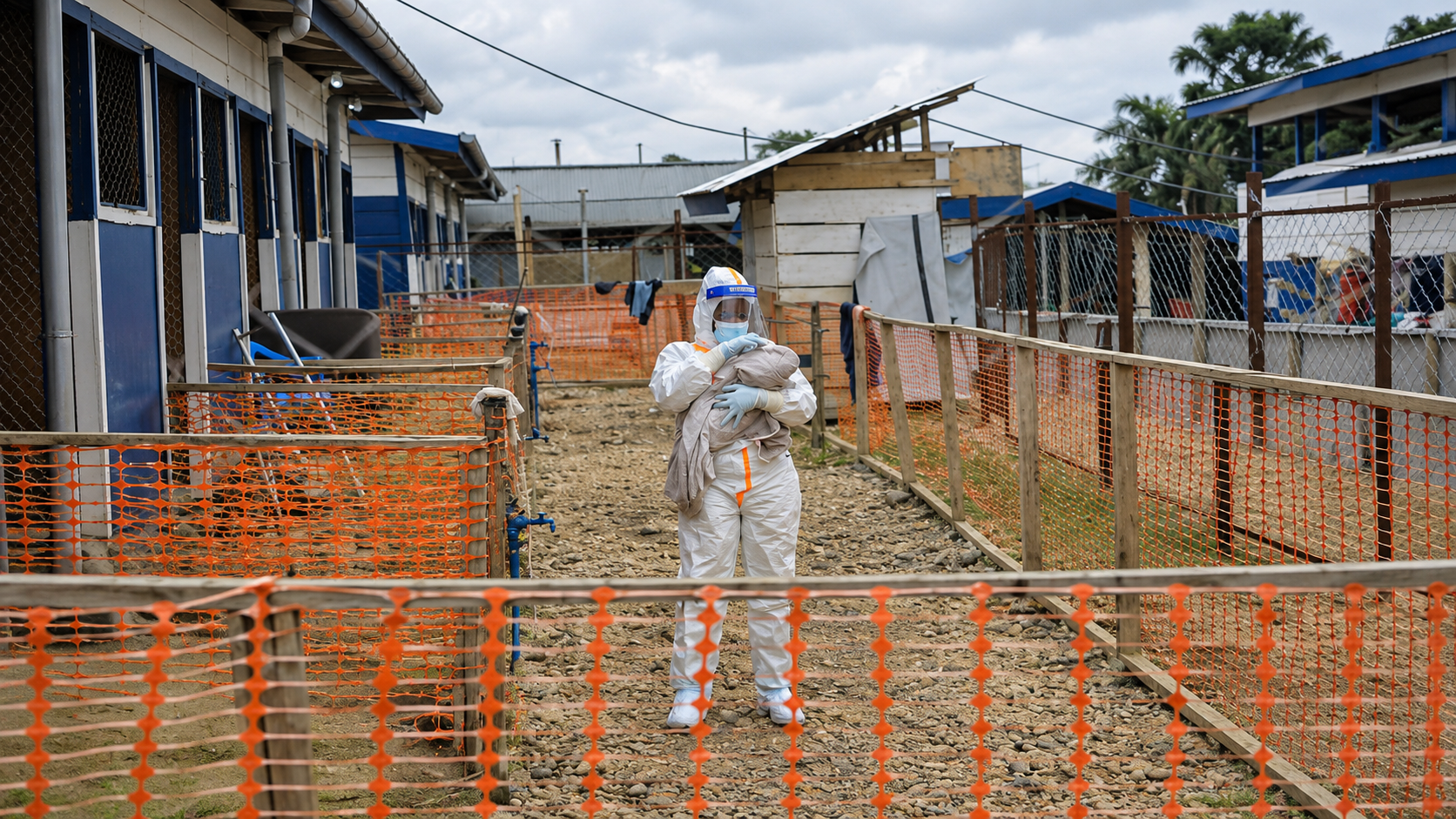
Bunia: The Democratic Republic of the Congo has recorded 11,042 Ebola cases and 5,387 deaths since an outbreak began in May, making it the deadliest in the country's history as health authorities struggle to contain infections amid armed conflict and disruptions to medical services.
The figures, released by Congolese health authorities and reported by the European Centre for Disease Prevention and Control (ECDC) on November 11, show that nearly half of those diagnosed have died. The outbreak has spread across eight of the country's 26 provinces, with Ituri and North Kivu among the most affected areas.
The outbreak, declared on May 15, is caused by the Bundibugyo strain of the Ebola virus. It is now the second largest Ebola outbreak recorded worldwide, following the 2014 to 2016 West African epidemic, which caused more than 28,600 infections and 11,000 deaths. Health authorities say transmission continues despite efforts to identify cases, trace contacts and isolate patients.
The World Health Organization (WHO) has warned that the outbreak remains a public health emergency of international concern, with infections declining in some areas while new transmission centres emerge elsewhere.
Efforts to contain the disease have been affected by armed conflict in eastern Congo, where insecurity has restricted access to communities and interrupted the work of health teams. Ituri province accounts for the majority of reported infections, while North Kivu has emerged as a centre of transmission.
Attacks on healthcare facilities and personnel have disrupted contact tracing, leaving some people exposed to the virus without monitoring. During an attack on Cantine Aloya in North Kivu last week, 66 civilians, including three healthcare workers, were killed, according to the WHO. Three health facilities were also attacked and damaged, further limiting access to medical services.
Healthcare workers have faced delayed payments, shortages of supplies and difficulties reaching affected communities, while poor road infrastructure has complicated the transport of patients and medical equipment.
Misinformation and mistrust of health authorities have also affected the response, with some communities resisting medical interventions and contact tracing. These conditions have made it harder to identify infections before they spread within households and communities.
The Bundibugyo strain presents a challenge because no vaccine or treatment has been approved specifically for it. Unlike the Zaire strain of Ebola, for which vaccines and antibody based treatments have been developed, the Bundibugyo strain has fewer established medical interventions.
Earlier this month, the WHO approved clinical trials of two vaccine candidates, with results expected in 2027. For now, healthcare workers rely on supportive treatment, including managing dehydration and complications, while isolating patients and tracing people who may have been exposed.
The outbreak has also exposed weaknesses in Congo's healthcare system, particularly in areas affected by conflict and limited public services. According to the WHO, more than 300 of the 512 deaths reported between October 21 and November 3 occurred outside treatment centres, highlighting difficulties in detecting infections and ensuring access to care.
The disease has also been detected in neighbouring countries, raising concerns about cross border transmission. Kenya has reported nine confirmed cases, including two deaths, while Nigeria recorded one case in October.
International health agencies are monitoring the situation and supporting surveillance, contact tracing and infection prevention measures. The WHO has called for greater access to affected communities and support for healthcare workers, warning that progress in some regions does not mean the outbreak is under control.
The crisis comes as Congo continues to face displacement, armed violence and pressure on public services, factors that have complicated responses to previous disease outbreaks. Although the country has experience managing Ebola, the scale of the current emergency has placed demands on health infrastructure and international assistance.
Health agencies say containing the outbreak will require cooperation between authorities, communities and humanitarian organisations, alongside improved access to medical facilities and support for affected populations.
The continued spread of infections also underscores the need for vaccine development, disease surveillance and investment in health systems capable of responding to outbreaks in conflict-affected regions.