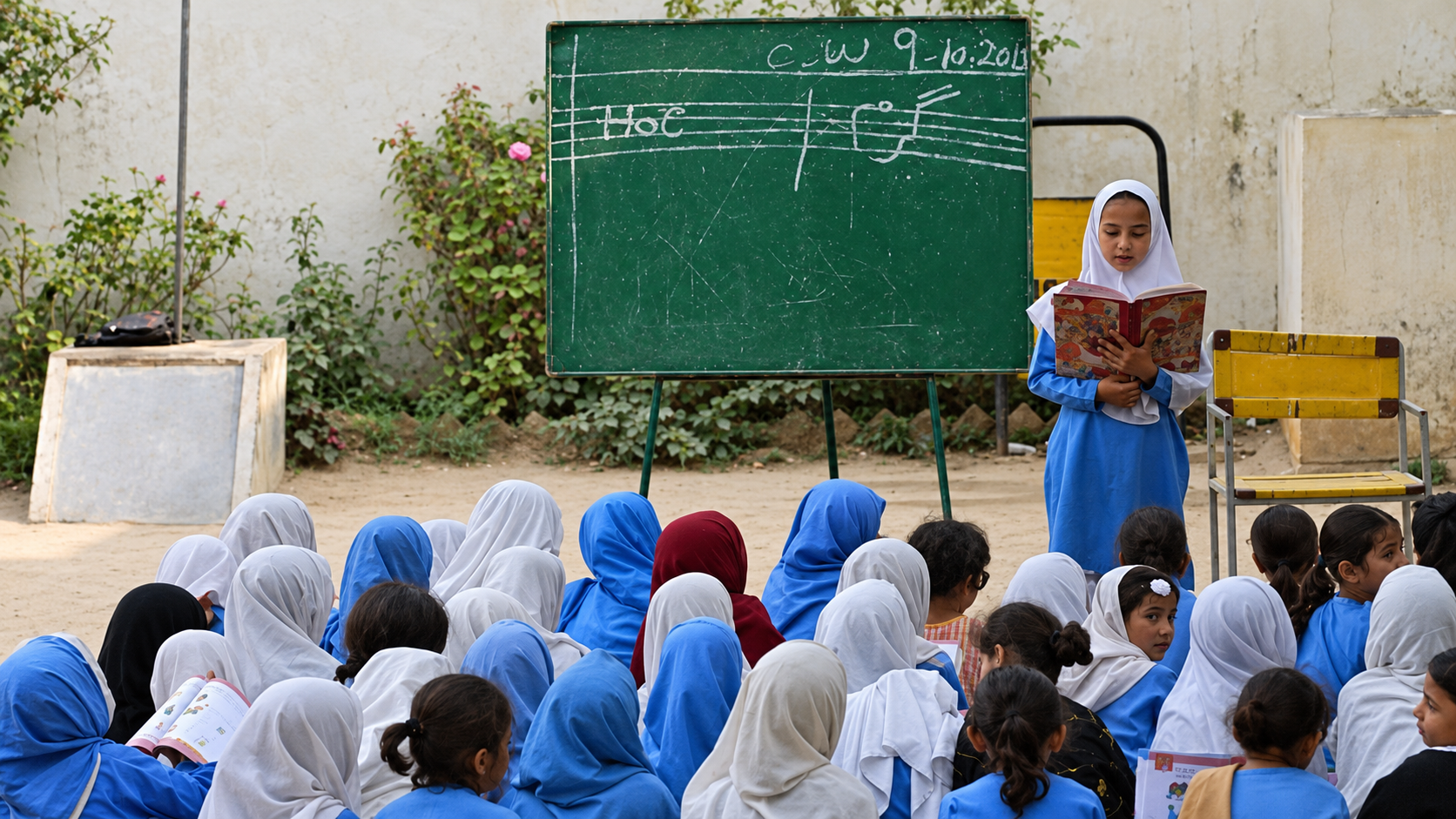
Quetta: The Balochistan Assembly unanimously adopted a resolution on Friday, November 13, asking the provincial government to make basic Arabic a compulsory subject in all government primary schools.
Shahida Rauf, a member of the provincial assembly from Jamiat Ulema i Islam Fazl (JUI F), moved the resolution.
She said learning basic Arabic would help children understand words and expressions they encounter in the Holy Quran.
The vote was a recommendation to the provincial government and did not itself change the school curriculum. No start date for Arabic lessons was announced during the debate.
What the resolution proposes
The resolution calls for a common syllabus, with lessons tailored to each grade. It recommends teaching basic vocabulary and grammar alongside the meanings of words and expressions commonly used in the Quran.
It also asks the government to introduce the subject in phases, taking account of pupils’ ages and learning needs.
Schools would need trained teachers, textbooks and classroom materials, with regular reviews to assess how the lessons are working.
Provincial Education Minister Raheela Hameed Khan Durrani told the assembly that primary schools were already reciting the Quran in classes. The proposed Arabic lessons would go beyond recitation by teaching vocabulary, grammar and meaning.
Lawmakers also press for mother language teaching
Former chief minister Abdul Malik Baloch urged the government to implement the province’s mother language education law alongside the proposed Arabic programme. He said children had a right to learn in their mother tongue.
The 2014 law provides for mother languages to be taught as compulsory additional subjects at primary level.
It allows the government to designate a language for each district and requires it to provide textbooks and prepare teachers to teach the prescribed languages.
Durrani said the government was seeking to expand teaching in local languages but faced resource shortages.
The debate raised a practical question for the province: how to staff and equip schools for Arabic lessons while also meeting its existing commitments to mother-language teaching.